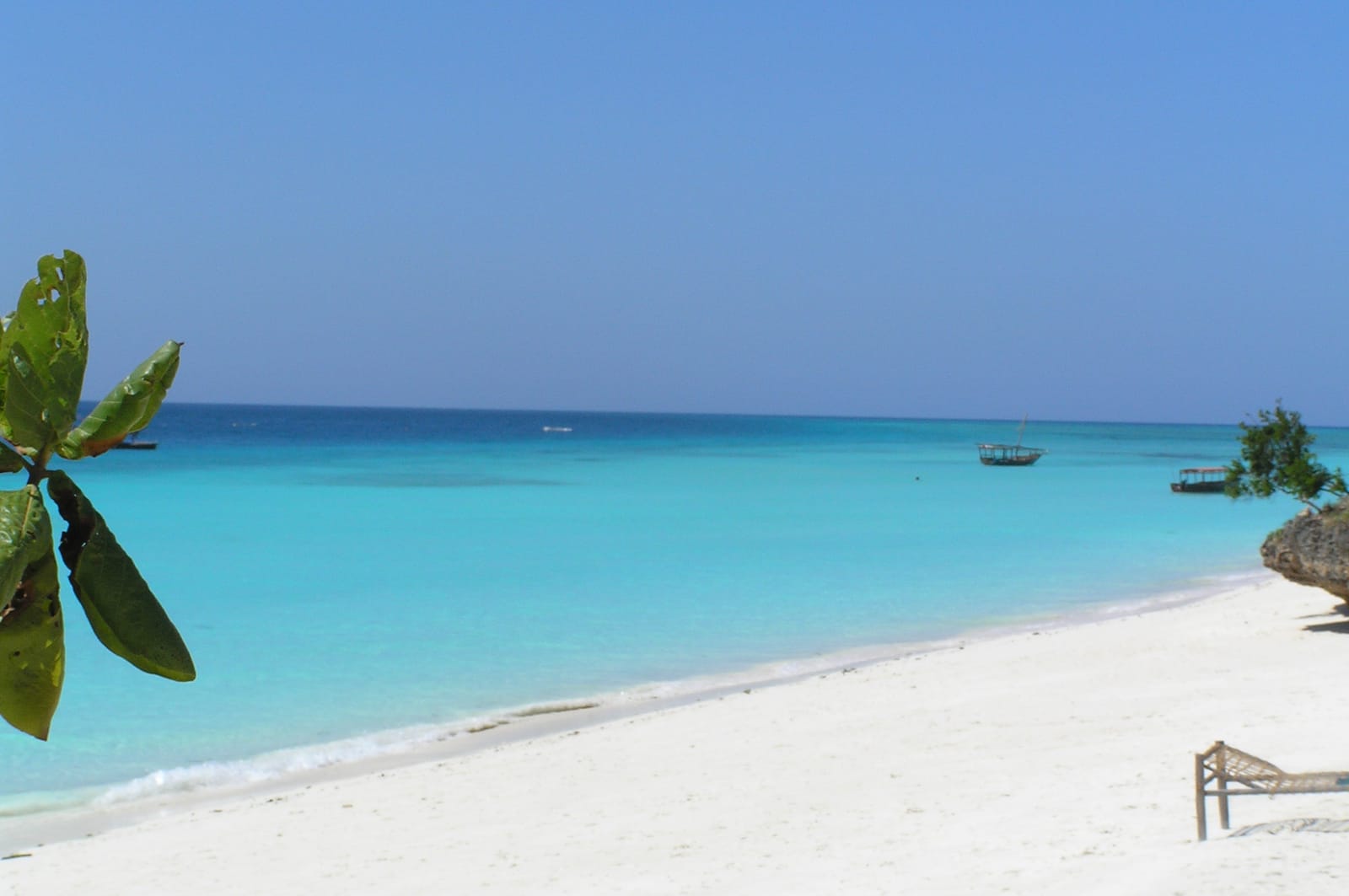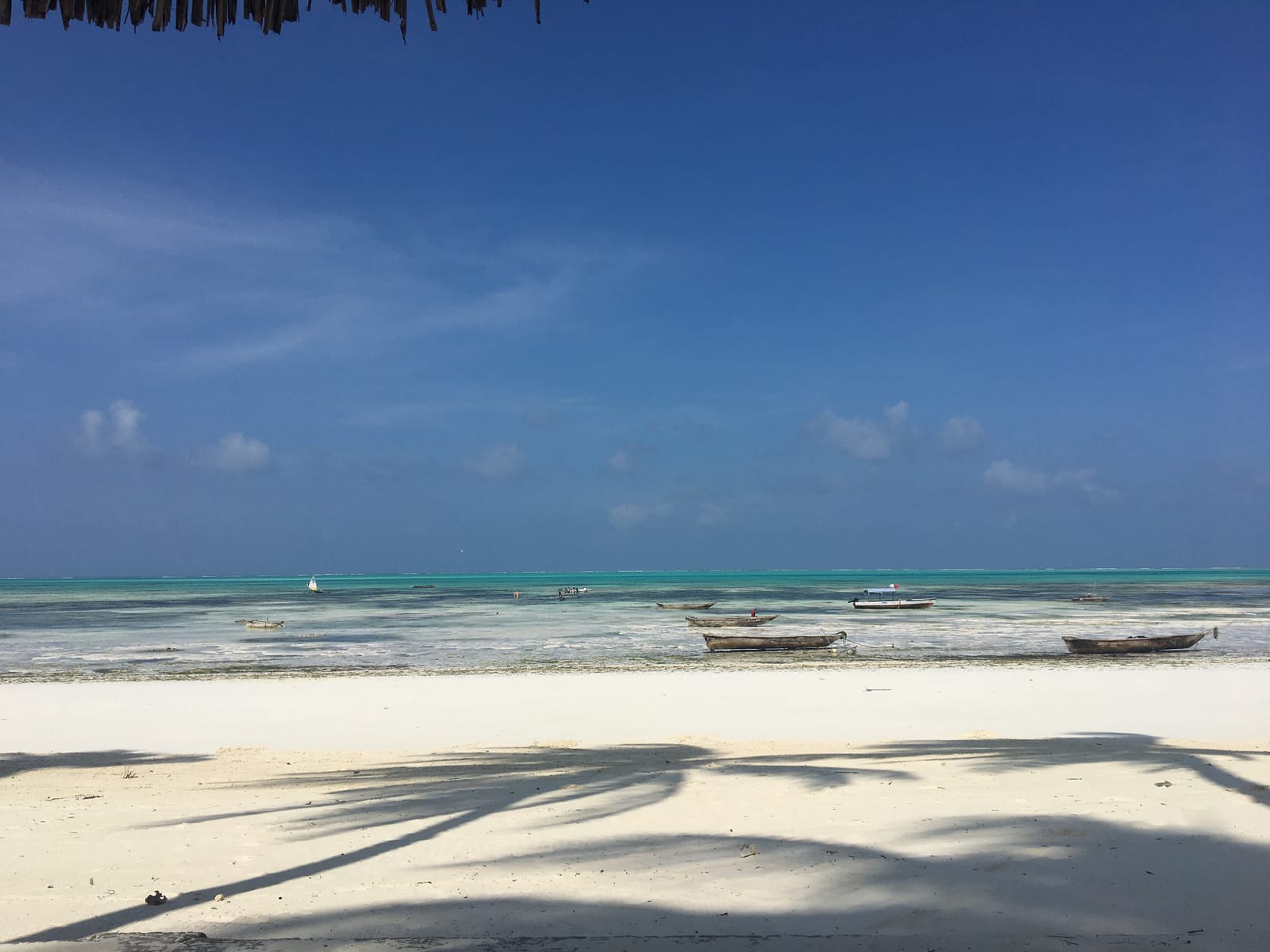
The south-east coast is the Zanzibar of the photographs: an unbroken run of white sand and palms, with water that turns four different colours between the beach and the reef break a kilometre offshore. It is also the coast with the most extreme tides on the island, and that single fact shapes everything about a stay here.
At low tide the sea retreats almost to the reef, leaving a vast shallow flat where villagers walk out to collect shellfish and women tend rows of seaweed. It is beautiful and strange, but you cannot swim. At high tide the lagoon fills and the whole coast becomes a turquoise swimming pool.
Paje has become the kitesurfing capital of East Africa — the flat, waist-deep, obstacle-free lagoon is close to a perfect learning environment — and with the kiters came a young, cheap, informal scene of beach bars and guesthouses. Jambiani, six kilometres south, is the quieter version: a village strung along the sand where the pace has barely changed.
Top things to do at Paje & Jambiani
Learn to kitesurf at Paje
Flat water, steady cross-shore wind and shallow depth make this one of the best places in the world to start. The reliable seasons are roughly December to February and June to September. Schools line the beach and most offer multi-day beginner courses.
Walk the flats at low tide
Free, extraordinary and easily the most memorable hour of many trips. Walk out among the seaweed lines and tidal pools — starfish, sea urchins and small octopus in the shallows. Wear reef shoes; the coral rubble is sharp.
Kuza Cave
A freshwater coral cave a few minutes inland from Paje, with startlingly clear water you can swim in and a small Swahili cultural centre attached. Cool, quiet and a genuine relief in the middle of the day.
Village life in Jambiani
Jambiani is one of the few beach areas where the village and the tourism sit side by side rather than separately. Walk the sand road, buy fruit, eat where the fishermen eat.
How to get to Paje & Jambiani
- Paje is roughly 50 km from Stone Town — about an hour by private transfer along a good tarmac road, and about 45 minutes from the airport.
- Dala-dala route 324 runs from Darajani to Paje and Jambiani. Cheap, slow and only for the unhurried.
- The two villages are 6 km apart, connected by a coast road; taxis and pikipiki (motorbike taxis) shuttle between them for a few dollars.
Insider tips
- Download a tide table before you arrive, or ask at your hotel each morning. Swimming, kiting and boat trips are all timed by it.
- Reef shoes are close to essential on this coast — for walking the flats and for entering the water over coral rubble.
- This is the cheapest good beach on the island. Excellent guesthouses go for a fraction of the north coast’s prices.
- Between March and May the seaweed washes up in quantity and hotels cannot always clear it. Factor this in if pristine sand is the priority.
Best tours & tickets for Paje & Jambiani
These top-rated experiences are the easiest way to enjoy Paje & Jambiani and its surroundings:
 Nature day trip from $80
 Jozani Forest & Salaam Cave with Pickup and Entry Fees
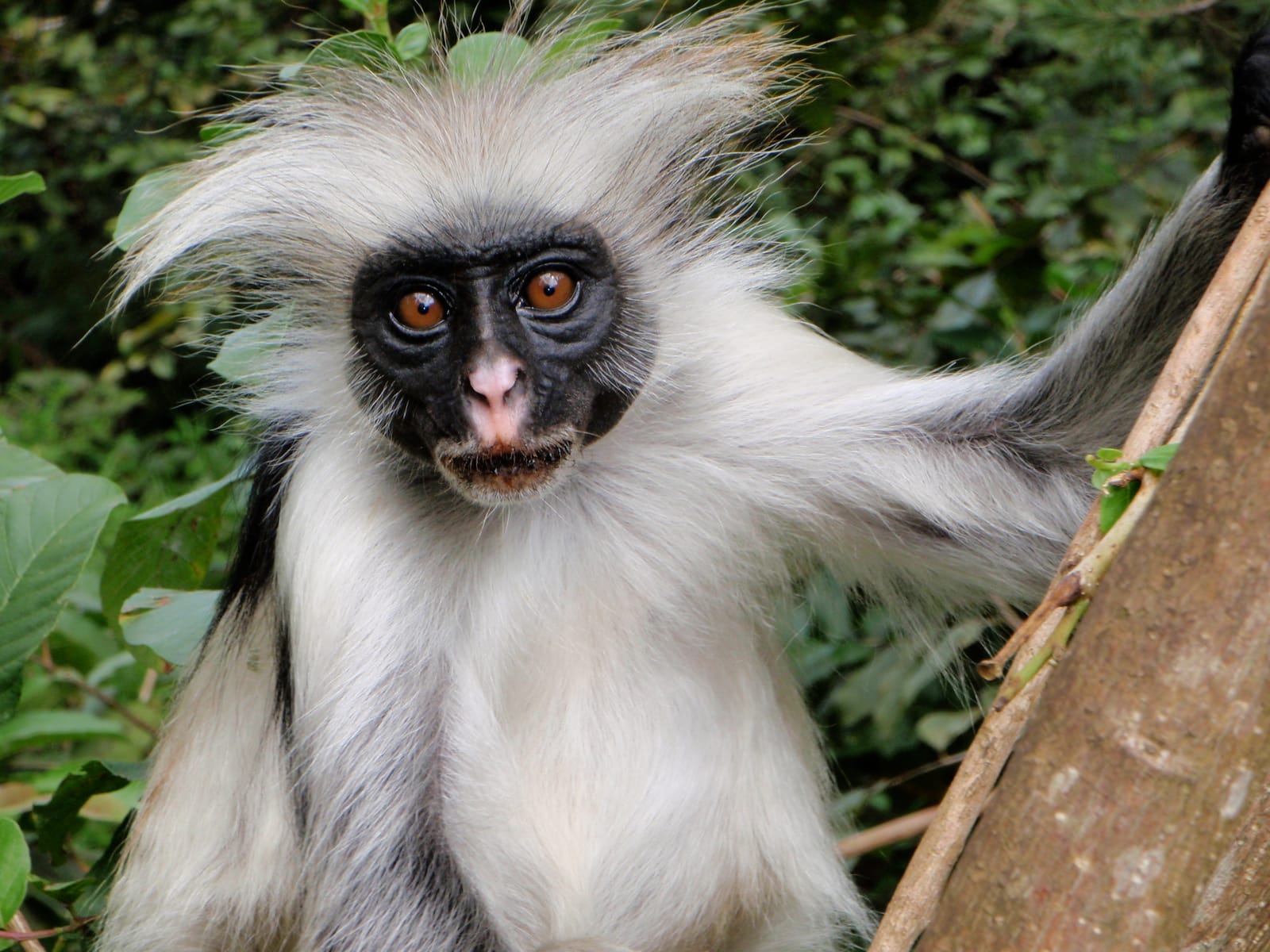
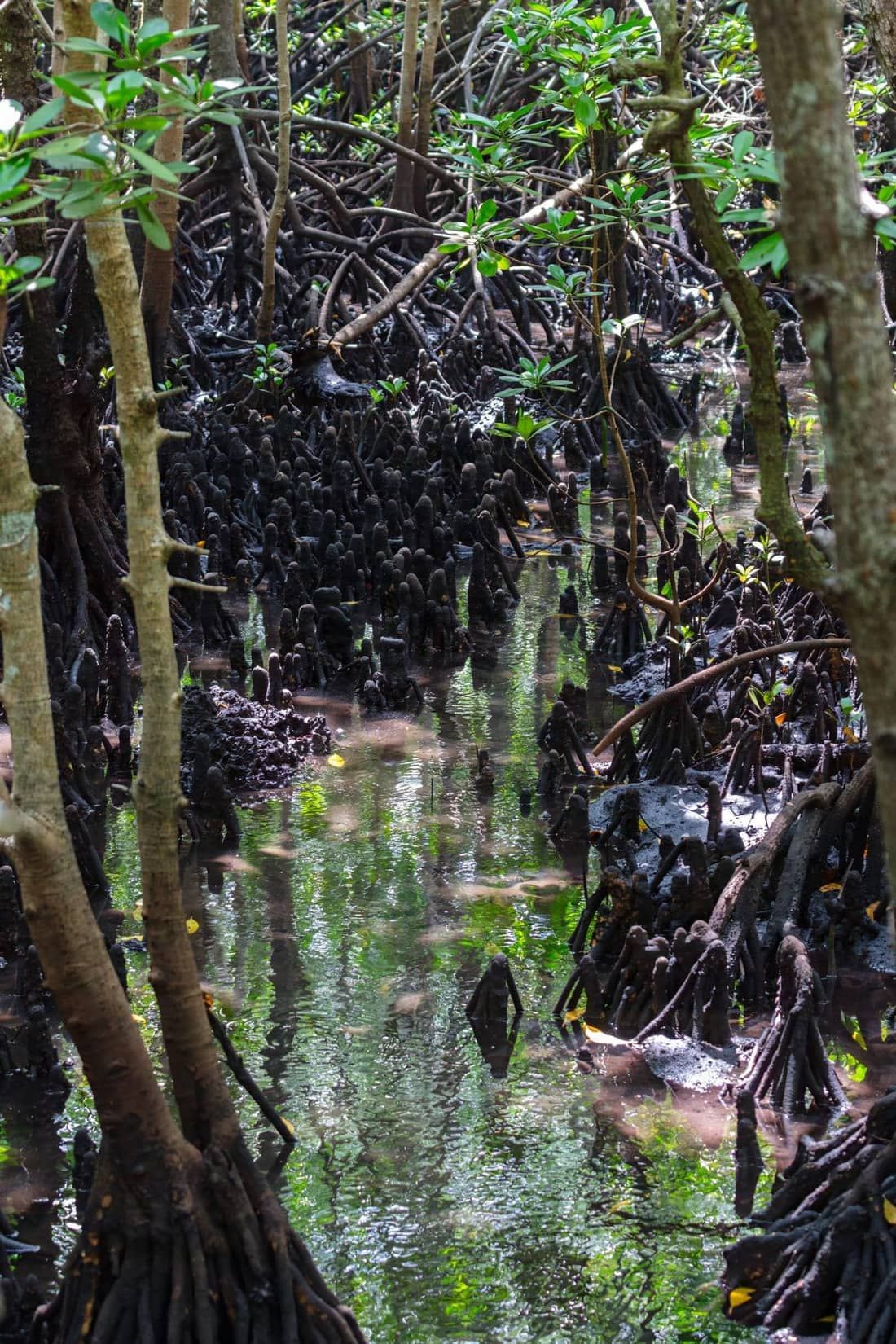
The island’s only national park protects the last stronghold of the Zanzibar red colobus, plus a mangrove boardwalk and towering mahogany. Paired with a swim among sea turtles in a natural cave pool, entry fees and transfers included.
- Zanzibar red colobus — found nowhere else on earth
- Mangrove boardwalk through the tidal forest
- Swim with sea turtles in the Salaam cave pool
 Private full-day from $180
 Sea Turtles, Kuza Cave, Paje Beach & The Rock Restaurant
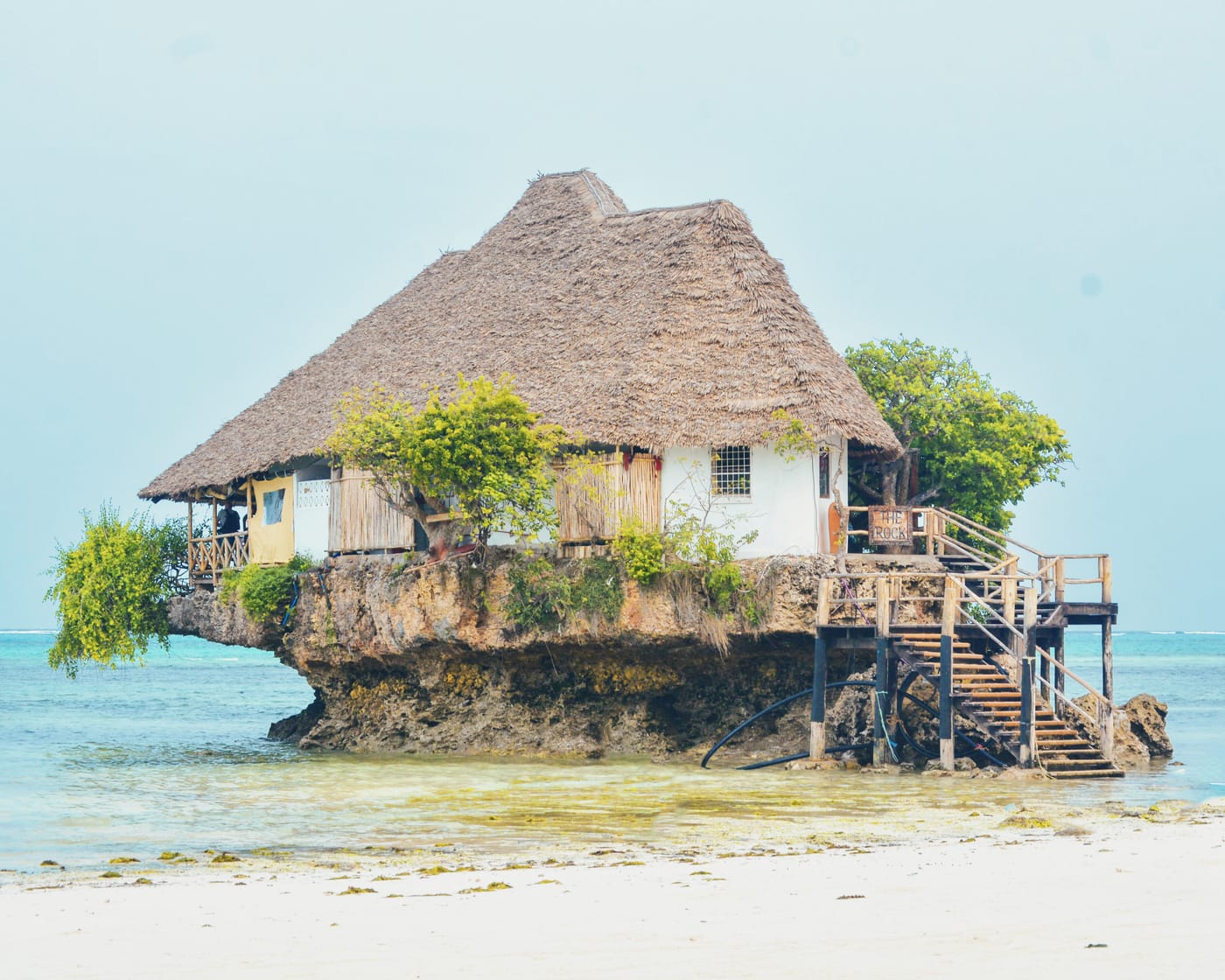
The east coast greatest hits, run privately: red colobus at Jozani, turtles at Salaam, a swim in a coral cave and lunch at the restaurant that sits on its own rock in the sea. Guides speak nine languages, Arabic included.
- Swim with sea turtles at Salaam cave
- Swim in the freshwater Kuza coral cave
- Lunch at the famous Rock Restaurant
 Dhow day trip from $90
 Safari Blue: Blue Lagoon Snorkelling & Seafood Lunch
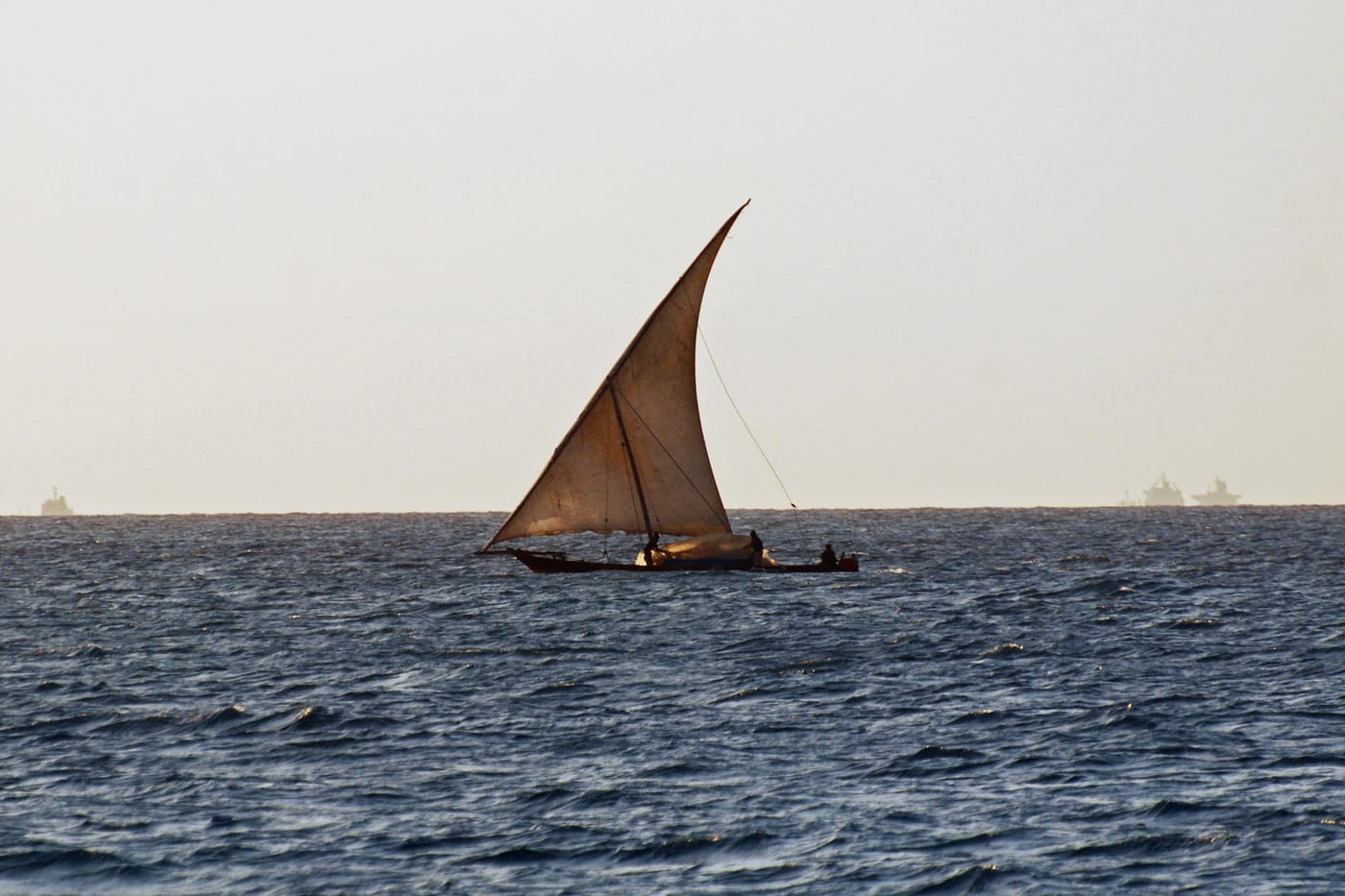
Zanzibar’s most famous boat day. A traditional dhow takes you across the Menai Bay conservation area to sandbanks, mangrove channels and the Blue Lagoon, with a long, unhurried seafood lunch in the middle of it.
- Sail a traditional dhow across Menai Bay
- Snorkel the coral gardens of the Blue Lagoon
- Seafood feast and tropical fruit on a sandbank
Where to stay near Paje & Jambiani
Compare hotels, guesthouses and beach resorts in this part of Unguja.
See hotels & prices →Paje & Jambiani FAQs
Frequently asked questions
Can you swim at Paje and Jambiani?
Yes, but only around high tide. The tidal range is large enough that at low water the sea is a kilometre out. Roughly half of each day is swimmable — check the tide table and plan around it.
Is Paje good for non-kitesurfers?
Yes. It has the best cheap food and the liveliest young traveller scene on the island, plus yoga, freediving and easy access to Jozani and The Rock. But if you want quiet, choose Jambiani or Bwejuu instead.
When is the kitesurfing season?
Two seasons: the kaskazi wind from roughly December to February, and the stronger, more consistent kusi from June to September. June to September is the more reliable of the two.